A breakdown of Biafra separatism, and where Kanu fits into the picture
The Conversation
19 Aug 2021, 00:13 GMT+10
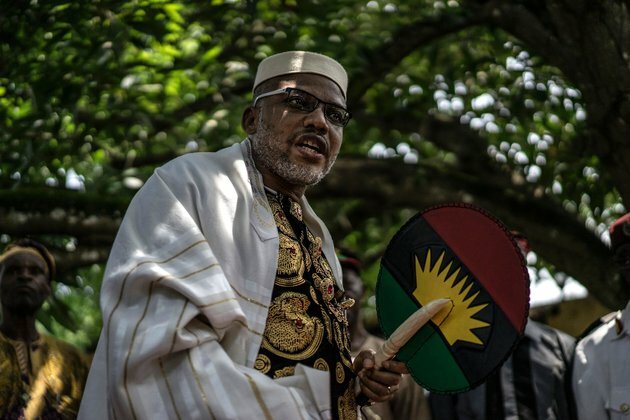
Nnamdi Nwannekaenyi Okwu Kanu is currently one of the most controversial figures in Nigeria. He is the leader of the Indigenous People of Biafra, one of the Biafra separatist organisations, as well as the director of Radio Biafra.
He was born in 1967 in present-day Abia state, South-East Nigeria, to parents from a family of royalty.
Kanu was an alumnus of the prestigious Government College Umuahia. He later enrolled to study geography at the University of Nigeria, Nsukka. Two years later he moved to the UK where he studied politics and economics at the London Metropolitan University.
Kanu was a relatively unknown figure in politics before 2009. That year he was enlisted by Ralph Uwazuruike, leader of the Movement for the Actualisation of the Sovereign State of Biafra, as a Radio Biafra anchor and broadcaster.
The radio station, which currently broadcasts out of London, served as the propaganda arm of the short-lived Republic of Biafra during the Nigerian Civil War (1967-1970).
The Nigerian government has previously claimed to be jamming Radio Biafra transmission signals. But the station continues to broadcast unhindered, mainly via the internet and shortwave.
The station is very popular among many Nigerians of southern origin. This is mainly because of its no-holds-barred and bellicose dissection of the major ills bedevilling the Nigerian state. In October 2018 over 200,000 people were reported to have downloaded the station's app to listen to Kanu make a broadcast from Israel. This was after a year of silence following his disappearance from Nigeria the year before.
Kanu's views are echoed by other Biafran separatist groups. Their grievances are rooted in the failure of the Nigerian state to implement the 3-Rs (reconciliation, rehabilitation and reconstruction) post-war peacebuilding initiatives in the country.
Unresolved issues
The war was ended on the principle of 'no victor, no vanquished'. But several policies have been introduced in the intervening years that have stoked Igbo resentment against the Nigerian state.
These include:
removing jurisdiction of state and regional governments from strategic resources like crude oil,
confiscating so-called 'abandoned property' of the Igbo after the war,
the indigenisation policy of the 1970s,
the transfer of mineral-rich areas of Igboland to neighbouring Rivers and Cross River (now Akwa Ibom) states.
Other grievances include poor investment, inequitable resource allocation, ethnic exclusion and military repression in the southeast region of Nigeria.
There are indeed major problems in the region. The area has become highly militarised over the past 20 years. The result has been an unusually high number of cases of extortion and other human rights abuses. For example, in 2016 Amnesty International accused the Nigerian military of embarking on a campaign of extrajudicial executions and violence. It said the actions had resulted in the death of at least 150 peaceful pro-Biafra protesters over the course of a year.
Kanu's ideology
Kanu's idea of Igbo nationalism is mainly underpinned by radical separatism. He represents the radical faction of the Igbo nationalists, which is largely confrontational.
For their part, conservative Igbo nationalists prefer a gradual diplomatic negotiation over their desired outcomes. These include the equitable inclusion of the Igbo in Nigeria's economic and political landscape.
Populist organisations that support the Biafran cause have, for the most part, been founded on the doctrine of non-violence. Although inspired by the Biafra secessionist movement led by Chukwuemeka Odumegwu Ojukwu between 1967 and 1970, separatist agitators are more inclined to civil disobedience than armed struggle.
The Indigenous People of Biafra is the most recent manifestation of Biafran separatism. It represents the militant wing of post-war Igbo nationalism. The organisation espouses the exit of the Igbo and other ethnic minorities from the defunct Eastern Region into an alternative political arrangement.
The Indigenous People of Biafra and other pro-Biafra organisations are considered militant relative to conservative Igbo nationalists.
Separatist agitators from the various organisations all agree on secession. But they differ on the operational strategies.
Kanu's Indigenous People of Biafra has set out three possible routes to sovereignty. The first is the threat of armed secession. The second is civil disobedience and the third a referendum. (The last two are not mutually exclusive.)
The option of armed struggle was first mooted in 2014. During the 2014 National Conference in Nigeria, Kanu threatened that war-torn Somalia would look like paradise should Igbo delegates to the conference fail to secure a secession.
A year later at a Convention of the World Igbo Congress in Los Angeles, California, Kanu stated:
Kanu's confrontational rhetoric and call for armed struggle were the reasons for his arrest in 2015 in Lagos. He was charged with sedition, ethnic incitement, terrorism and treasonable felony. His arrest was met with protests by the Indigenous People of Biafra members in different parts of Nigeria. Areas particularly affected were Abia, Anambra, Cross River, Delta, Enugu, Imo and Rivers States. The protests heightened tension in Igboland, especially the southeast region of Nigeria. They also put pressure on the Nigerian government to act.
In September 2017 President Muhammadu Buhari launched Operation Python Dance II in the southeast. The operation was putatively deployed to combat crimes. But it later turned into a repressive tool against unarmed members of the Indigenous People of Biafra.
That same month the Nigerian government declared the Indigenous People of Biafra a proscribed organisation. But its activities have not abated.
In December 2020, the organisation founded its paramilitary wing, known as the Eastern Security Network. According to the media and publicity secretary of the Indigenous People of Biafra, Comrade Emma Powerful, the network was mandated to defend what he described as Biafraland by counteracting the activities of suspected armed Fulani herdsmen against peasant farmers and local communities.
The way forward
The agitation for Biafra separatism has grown in frequency, intensity and geographical spread during Buhari's presidency.
Two factors might be responsible for this.
The first is the alleged lopsidedness of Buhari's key appointments, which leaves southern Nigeria, particularly the Igbo, with the shorter end of the stick.
A second factor has been the siting of physical infrastructure across the country. One example is the construction of a rail line in which the Port Harcourt-Maiduguri rail project was completely neglected. Another was the National Assembly approving a massive infrastructural development plan without allocating a single project to the South-East zone.
In my view only inclusive governance that reflects Nigeria's federal character and multinational composition will stem Biafra separatism in the country.
Author: Chikodiri Nwangwu - Lecturer, Department of Political Science, University of Nigeria 
 Share
Share
 Tweet
Tweet
 Share
Share
 Flip
Flip
 Email
Email
Subscribe and Follow
Get a daily dose of Africa Leader news through our daily email, its complimentary and keeps you fully up to date with world and business news as well.


News RELEASES
Publish news of your business, community or sports group, personnel appointments, major event and more by submitting a news release to Africa Leader.
More InformationPhilippines says F-16 purchase not targeting China, any others
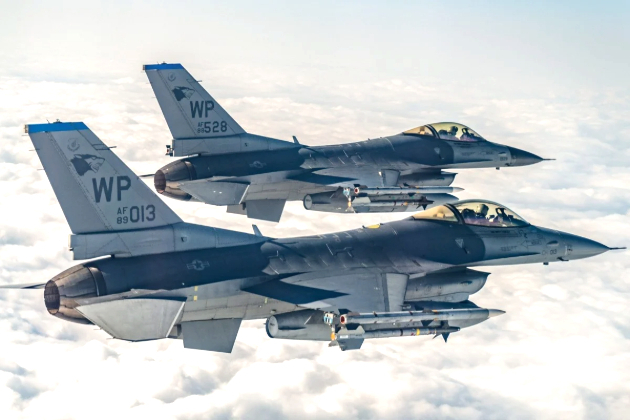
MANILA, Philippines: A Philippine security official stated that acquiring F-16 fighter jets from the United States will not harm any...
Amazon set to launch first project Kuiper satellites

WASHINGTON, D.C.: Amazon.com has announced that it will launch the first 27 satellites for its Project Kuiper internet network this...
More than 400 aid workers killed in Gaza since October 7 2023
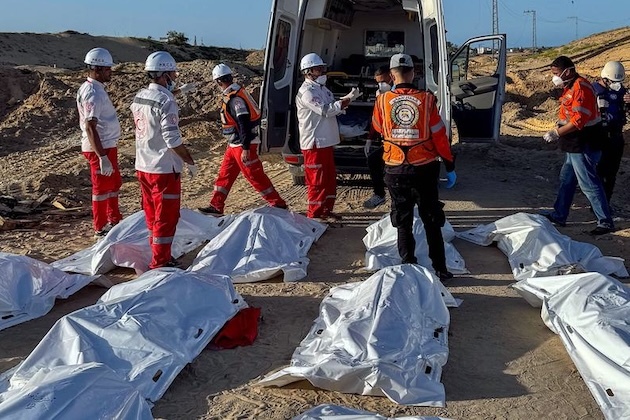
NEW YORK, New York - UN Secretary-General Antonio Guterres has voiced profound concern over the escalating human toll in Gaza, as...
Billionaire Kretinsky clears final hurdle in Royal Mail takeover

LONDON, U.K.: Daniel Kretinsky's path to owning Royal Mail is nearly complete, as his firm EP Group announced this week that all regulatory...
AP study: MLB average salary hits $5 million for first time

NEW YORK CITY, New York: Major League Baseball (MLB) players now earn an average of over US$5 million per year for the first time,...
Former coal plant to become $10 billion data center for AI, Cloud
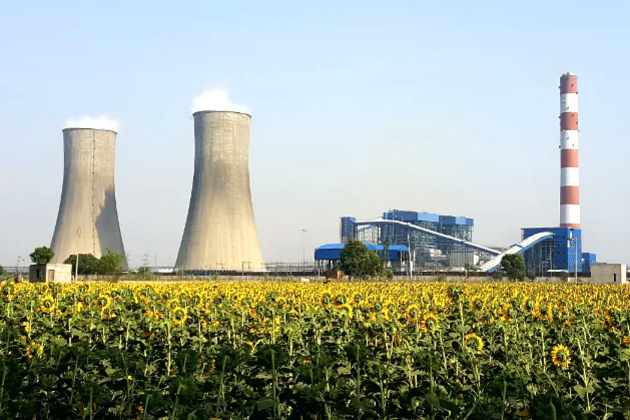
HARRISBURG, Pennsylvania: The owners of Pennsylvania's largest former coal power plant plan to turn it into a US$10 billion natural...
Tesla struggles as sales drop and competition rises

AUSTIN, Texas: Tesla's early-year performance has taken a hit, as sliding sales, rising competition, and CEO Elon Musk's growing political...
India’s jewellery exports hit by US tariffs

MUMBAI, India: India's jewellery exporters are facing their toughest year in over a decade as fresh U.S. tariffs threaten to cut off...
Mitsubishi eyes role in Alaska’s LNG export project

TOKYO, Japan: Mitsubishi Corp is weighing a potential role in Alaska's ambitious LNG export project, as the Japanese trading giant...
Netflix expands language tools to boost global viewing

LOS GATOS, California: As international content fuels its global growth, Netflix is expanding its language tools on TV to help users...
Artificial Intelligence landscape becoming more competitive

Artificial intelligence (AI) has seen rapid growth, transforming industries and daily life. From chatbots to advanced generative models,...
Job growth signals strength amid economic uncertainty

WASHINGTON, D.C.: U.S. private sector hiring exceeded expectations in March, suggesting some underlying strength in the labor market...